
Dental Implants Reno
The Gold Standard of Tooth Replacement
Dental implants are an incredible solution for replacing missing teeth because they can do things that other restorations can’t; for instance, they replace the root structure of missing teeth, whereas traditional dentures do not. But the advantages don’t stop there; dental implants offer all sorts of other impressive, life-changing benefits! To learn more about dental implants in Reno and how our team can use them to restore your smile and boost your quality of life, contact our office today.
Why Choose Smile Design Implant Centers for Dental Implants?
- Entire Implant Process Completed In-House
- Flexible Financing Options Available
- Skilled Dental Team with Years of Experience

The Guide Will Show You
- Dental Implant Options
- Average Pricing
- Factors that Affect Eligibillity
- And More!
What Are Dental Implants?

Dental implants are small posts made from titanium that are surgically placed directly into a patient’s jawbone. Since they’re made from titanium, which is biocompatible with bone tissue, they can fuse with a patient’s jaw and act as replacement tooth roots for a corresponding dental restoration. They also offer incredible, unmatched oral functionality and effectively prevent future bone resorption. Better yet, under ideal circumstances, dental implants have the potential to last for decades or even a lifetime!
The 4-Step Dental Implant Process

Dental implants are placed through a specialized multi-step process that gives restorations mounted upon them the strength and stability they need to behave exactly like real teeth and last much longer than traditional tooth replacement devices. At Smile Design Implant Centers, our skilled team is qualified and equipped to carry out the entire treatment in-house, which helps make receiving dental implants a smooth and stress-free process. Here’s a quick look at how dental implant placement works, but please feel free to contact our Reno office if you’d like to know more or schedule a consultation.
Initial Dental Implant Consultation

During this appointment, we’ll be able to evaluate your tooth loss and oral health to determine if dental implants are a viable option. Patients with insufficient jawbone density or compromised gum health might need to undergo preliminary procedures before receiving dental implants. Once you are approved for implants, our dentist will be happy to develop an effective treatment plan that suits your needs and fits your schedule.
Dental Implant Surgery

We can complete the entire dental implant process here in our Reno dental office, which ultimately saves you time and energy and makes coordinating your schedule much easier. The procedure itself is very straightforward; our dentist places the implants where they’re needed directly into the jawbone via a minor surgery. This process is only performed after the patient receives an appropriate anesthetic to ensure their comfort, and most people who receive implants report that the procedure is much more comfortable than extractions.
Dental Implant Osseointegration & Abutment
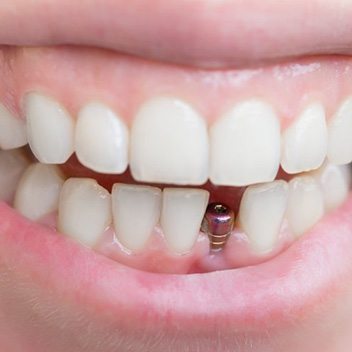
After the implants have been placed, the process of osseointegration begins, during which the biocompatible titanium posts fuse with the living jawbone tissue surrounding them. This establishes the sturdy foundation your implants need for maximum stability, longevity, and chewing power. After your implants fuse with your jaw over several months, you’ll come back to our office to have abutment pieces placed on the devices through another minor surgical procedure. We’ll also take detailed bite impressions during this appointment.
Delivery of Dental Implant Restoration(s)
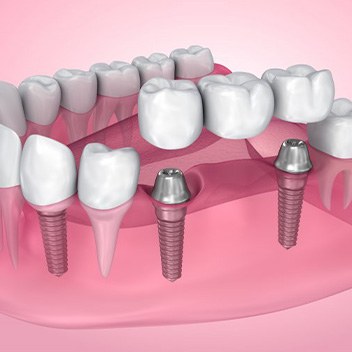
Once you have healed after receiving abutments (which usually takes about two weeks), you’ll return to our office to receive your custom-made dental restoration. After attaching it to your abutments and making sure that everything looks and functions correctly, we’ll happily send you on your way to enjoy your brand-new smile!
Who Dental Implants Can Help

If you’re interested in addressing tooth loss head-on with dental implants, we have good news for you: they are quite versatile! If you want to find out if you’re a candidate, then schedule a consultation with our Reno dental team so we can learn about both your dental needs and smile goals. If you want to learn more before booking an appointment, then read on.
Who Is a Good Candidate for Dental Implants?

Simply put, there are a variety of factors that go into whether or not a patient is a good candidate for dental implants. A few examples include if you stay on top of your at-home and professional dental hygiene regimen, if you are willing to break bad habits, like smoking, and if your gums are healthy. Of course, dental implants require healthy bone structure to be successful, so patients should have enough natural bone to hold an implant as well. If your jawbone has receded over time, a bone graft may be required to correct this issue and allow you to receive dental implants.
Missing One Tooth

Whether there is a noticeable gap when you smile or you’re missing one of your back molars, don’t worry – dental implants may be an option! If that’s the case, we will insert the implant into your jawbone, wait for it to fuse properly, and then attach a custom dental crown on top. Not only will your replacement tooth look like the real thing, but it will feel equally as natural. So, you don’t have to worry about unwanted attention being drawn to your smile; the final result will be seamless.
Missing Multiple Teeth

Previously, dental bridges or partial dentures were required to replace several missing teeth. Although these are still great options, dental implants are considerably more popular because they are the only tooth-replacement solution that stimulates your jawbone (which helps prevent bone loss). Plus, your healthy enamel doesn’t need to be altered in the process of filling the gaps in your smile. So, if you are missing several teeth in a row or multiple teeth throughout your mouth, consider dental implants!
Missing All Teeth

If you are missing all of your teeth, then you know first-hand how difficult it can be to smile confidently, eat a well-balanced diet, and communicate clearly. Fortunately, a denture can be attached to 4-8 strategically placed dental implants, giving you a healthy, complete, and beautiful smile again. If this sounds like the solution you’ve been looking for, then don’t hesitate to schedule a consultation at our Reno dental office so we can determine if this is the best tooth-replacement option for you. There’s a good chance the answer is “yes!”
Benefits of Dental Implants
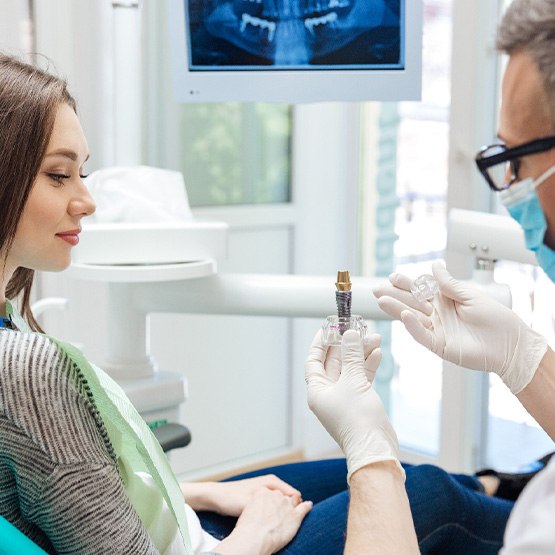
Many experts consider these replacement teeth the ideal way to rebuild smiles after tooth loss because of their unique advantages. Unlike dentures and bridges, they are embedded directly into your jaw and eventually fuse with the bone, which often makes them sturdier and more reliable than the alternatives.
Continue reading to learn more about the different benefits of getting dental implants and please feel free to contact us to schedule an appointment.
Day-to-Day Benefits
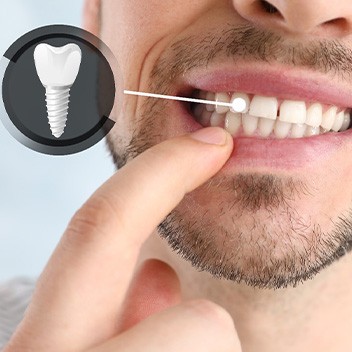
These restorations are the only ones that are surgically placed into your jawbone so they function more like natural teeth. This provides several day-to-day advantages, including:
- Improved enunciation. Gaps in your grin left behind by missing teeth can result in a lisp, slur, or other changes to your speech patterns, which can be overcome with new teeth in place.
- Better bite force. This is the only treatment that can return up to 80% or more of your original chewing power, so there are fewer dietary restrictions.
- Boosted confidence. Your implants are capped with a lifelike restoration customized to look and feel as natural as possible to enhance your self-esteem.
Health Benefits
Not only can these reliable replacements offer several daily advantages, but they can also potentially help improve your oral and overall health in the following ways:
- Easy maintenance. Keeping your implants in good shape can be as easy as brushing and flossing twice daily and visiting our team every 6 months for a routine checkup and cleaning.
- Preserve your jawbone. They are the only treatment that involves placing a support rod into your jaw, which functions like a root to keep it active and healthy, preventing the degeneration that typically accompanies tooth loss.
- Prevent dental drifting. The remaining teeth in your mouth are prone to shifting into empty spaces, wearing down your enamel, and causing oral issues. Your implants help ensure everything remains in its rightful position.
Long-Term Benefits

Your new teeth also provide several long-term advantages, such as:
- High success rate. The procedure has an incredibly high success rate of over 90%, meaning most patients won’t develop complications as long as they follow the post-operative instructions closely.
- Resilient materials. They’re made from durable materials designed to withstand the pressure of biting and chewing, and can last 20+ years if cared for properly.
- Save money over time. They’re less likely to become destabilized or dislodged, which often results in costly repairs or replacement. Plus, there’s no need to invest regularly in additional accessories and supplies, such as adhesives, cleaners, or soaking solutions.
Understanding the Cost of Dental Implants
Implant restorations involve an advanced and complex treatment process, so understanding the cost of dental implants in Reno isn’t always straightforward. Rest assured, your implant dentist is dedicated to financial clarity and will discuss your potential expenses with you during a consultation. Our team is also happy to help you file any dental insurance claims or explore other affordability options.
Preliminary Treatments & Dental Implant Surgery
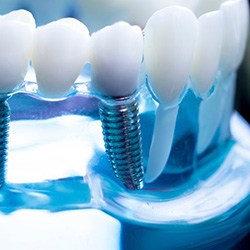
Preliminary treatments include procedures like gum disease therapy and bone grafting. The purpose of including them in a dental implant plan is to restore your oral health or strengthen your jawbone in order to set you up for treatment success. In other words, not everyone needs preliminary treatment.
Since dental implant surgery is considered as a separate procedure, patients who do need preliminary treatments will have more overall expenses. However, they’ll also likely avoid costs related to dental implant failure. Rest assured, both your smile and your wallet will appreciate it if you follow your implant dentist’s recommendations!
The Parts of Your Dental Implant
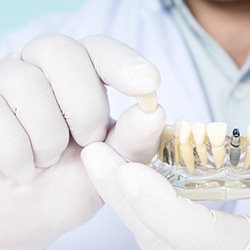
A dental implant restoration involves three main parts: the titanium post anchored to the jawbone, the replacement teeth, and the abutment that connects them. The abutment is often included in the cost of the dental implant, which have fairly “standard” prices. The price of your replacement teeth, though, will vary depending on whether you need a single crown, bridge, or denture.
How Dental Implants Can Save You Money

One of the advantages of a dental implant restoration is that they can last twice as long as their traditional counterparts. With proper care, for example, a traditional denture can hold up for about 15 years, while an implant denture can support your smile for 30 years or more. You’ll likely need fewer repairs and maintenance appointments with dental implants, saving you money in the long run.
Does My Dental Insurance Cover Dental Implants?
Dental implants themselves, unfortunately, are usually considered to be a “luxury” expense by dental insurance plans. As such, few policies cover costs associated with the post or abutment.
The good news is that most dental insurance plans do cover other aspects of a dental implant treatment, such as oral surgery, preliminary procedures, and replacement teeth. So your policy could still help you offset some of your expenses.
Making Dental Implants Affordable

If you don’t have dental insurance, you may be interested in flexible financing options. Our office works with CareCredit, Proceed Finance, and iCreditworks – all reputable third-party financiers who offer little-to-no-interest monthly payment plans. If you’re approved, you’ll be able to pay at your own pace and spread your treatment costs out over multiple paychecks.
Maintaining & Caring for Your Dental Implants

Can you imagine investing your valuable time and money in the dental implant process, only for yours to fail within a matter of months or years? Fortunately, there are several steps you can take to prevent that from happening (as well as a few habits you should avoid). To learn what they are, read on!
Make Oral Hygiene a Priority

Although your dental implants are artificial and, therefore, cannot decay, your natural teeth still can, and your gums can develop an infection if you neglect them. So, make sure that you focus on being consistent with brushing, flossing, and rinsing with mouthwash. It’s also important to replace your toothbrush every quarter, clean your toothbrush holder, and throw out any expired products.
Eat a Healthy Diet

While some foods benefit your oral health, others have the opposite effect. That’s why it’s so important to stick to a healthy, well-balanced diet that’s filled with lots of smile-friendly foods, like fresh fruits and lean proteins. It’s equally as important to steer clear of hard pretzels, candy canes, taffy, peanut brittle, and other foods that can tug on your restoration or break it.
Break Bad Habits

Some habits are known for being dangerous, like smoking. Others seem harmless, like biting your nails or chewing on ice cubes. The reality is that even these increase your risk of dental implant failure. So, if you haven’t already, now is the time to commit to quitting. If you need some help, don’t hesitate to ask us about what has worked for other patients!
Important note: Do NOT use your teeth as tools! Always use scissors to remove plastic wrapping or a bottle cap opener to remove a bottle cap. It’s a small step that will make a dramatic difference when it comes to the lifespan of your dental implants.
Protect Your Dental Implants

Implementing a solid oral hygiene regimen at home and breaking bad habits will protect your dental implants, but there’s another important step you need to take: wearing a mouthguard when you’re active. Similarly, you should wear a nightguard if you grind or clench your teeth at night. That way, your restoration doesn’t chip or crack under the pressure.
Schedule Regular Dental Checkups

As we mentioned above, dental implants cannot decay. It is possible for them to become loose, however. With routine checkups, we can monitor their condition while also screening for oral cancer, tooth decay, gum disease, and other serious problems. Plus, the cleanings ensure plaque and tartar are removed before they wreak havoc on your oral health.
Dental Implant FAQs
How Long Do Dental Implants Last?
If properly cared for, your dental implants can last a lifetime. The implant itself is permanently secured to your jawbone, however its lifespan greatly depends on how well you take care of your oral health.
To ensure that they last as long as possible, it is important that you brush and floss them just as you would your natural teeth and attend dental checkups regularly. Furthermore, do not use them for anything other than chewing food, and try to avoid anything that is too hard or sticky.
Finally, if you are a smoker, it is important to quit, as in addition to causing myriad health problems, smoking can also increase your odds of implant failure.
Can I Take Dental Implants Out?
No, you cannot take your dental implants out because they are permanently fixed to the bone. If they need to be removed, your dentist must perform the procedure. The crown and abutment portion of your implants can be removed and replaced as needed.
There are also some types of implant dentures that can be removed for cleaning. Your dentist can explain your options for what type of implant is best for your mouth at your consultation appointment.
Does Getting Dental Implants Hurt?
Your mouth will be numbed with local anesthesia prior to the start of your dental implant procedure, so you should not feel any pain. You may also be sedated during this time, which will lower your body’s ability to register pain.
Though your jawbone does not have very many nerve endings, you may still experience a little soreness for a few days after the procedure. This can be alleviated with the help of over the counter or prescription pain medications as directed. You can also apply cold compresses for 20 minutes at a time.
Should your discomfort worsen instead of improving after two or three days, contact your dentist as soon as possible.
Do Dental Implants Decay?
Because your dental implants are not biological teeth, they cannot decay or get cavities, however any of your remaining natural teeth still can. Your gums can also still become infected, causing a condition known as peri-implantitis. This is one of the main causes of dental implant failure. Thus, maintaining proper oral hygiene is still extremely important after dental implant surgery, even if you’ve replaced all of your teeth.
Dental Implant Post-Op Instructions

Once you receive your new dental implants, there are a few steps you’ll need to take to ensure a swift and successful recovery. The dental implant post-op instructions in Reno that you’ll receive will help you avoid complications and instead encourage proper healing as you move one step closer to enjoying life with a new, permanent smile.
What to Do Directly After Dental Implant Surgery

When your dental implant surgery is complete, you’ll need to make sure that you have someone who can take you home to start the recovery process. The anesthesia administered at the start of your procedure will need time to wear off, so you will be unable to drive.
Once you are home, make sure to have an over-the-counter pain reliever readily accessible so that you can take it once you notice the anesthesia wearing off. This will reduce the amount of discomfort you experience, which is normal.
If you smoke, do not attempt to pick up your habit right away. Instead, wait at least 24 hours. Nicotine will only prolong the healing process – a factor that causes many dentists to strongly urge patients to quit before receiving dental implants.
Common Side Effects

Do not be alarmed if you notice some slight bleeding and swelling after your procedure. This is normal. It will take time for your gums and bone to heal, so feel free to use a cold compress to reduce inflammation and discomfort. If you do notice that these post-operative side effects do not decrease but instead increase, call our office right away.
Diet

The first several days after your procedure, you’ll want to stick to a liquid diet to allow your mouth more time to heal. After that, you are free to incorporate soft foods such as pudding, yogurt, mashed potatoes, etc. This will allow you to receive more nutrients but avoid pressure placed on your gums and bone.
Once your mouth begins to feel “normal,” you can introduce solid foods into your diet.
Health & Oral Hygiene

The day you return home from your procedure, you’ll need to leave your mouth untouched; however, after a full 24 hours, you can resume your normal oral hygiene routine. Brushing and flossing are essential to ensure bad bacteria do not infect the surgical sites, but you will need to be careful not to aggravate your dental implants in Reno.
Instead of using mouthwash to rinse your mouth, gargle with warm salt water, as this will help to alleviate discomfort and encourage healing. Just be careful not to spit.
What to Do After Your New Teeth Are Attached

Once your custom restoration is secured in place by your implant dentist in Reno, you can begin to enjoy life with your new dental implants. It’s not uncommon to experience some slight sensitivity; however, this will dissipate within a few days. Also, you may need time to adjust to your new teeth, especially a denture, if you’ve been without teeth for some time.